
The question of whether cryptocurrency remains a worthwhile investment in 2026 carries more complexity than during Bitcoin’s explosive early years, when asymmetric risk-reward profiles attracted early adopters seeking generational wealth opportunities. Today’s cryptocurrency landscape has matured substantially—spot Bitcoin ETFs trade on major US exchanges, institutional investors allocate billions to digital assets, and regulatory frameworks continue evolving in the United States, United Kingdom, and globally. Yet this maturation coincides with increased volatility, regulatory uncertainty, high-profile failures, including the FTX collapse, and valid questions about whether the extraordinary returns of the past remain achievable for new entrants entering a multi-trillion-dollar asset class.
For prospective investors in the US and UK evaluating cryptocurrency’s role in their portfolios, the decision requires an honest assessment of both compelling opportunities and significant risks that distinguish digital assets from traditional investments. The cryptocurrency market no longer represents the speculative frontier occupied exclusively by technologists and libertarian idealists—it has become an established alternative asset class attracting everyone from individual retirement savers to sovereign wealth funds. However, this mainstream acceptance hasn’t eliminated the extreme volatility, technological complexity, security vulnerabilities, and regulatory uncertainties that make cryptocurrency investing fundamentally different from purchasing stocks, bonds, or real estate.
This comprehensive analysis provides the balanced perspective new investors deserve, examining cryptocurrency’s current value proposition through empirical evidence rather than hype or fear. We’ll explore the fundamental arguments supporting cryptocurrency investment, confront legitimate concerns and risks candidly, analyze current market dynamics compared to historical patterns, and provide actionable guidance for those deciding whether, how, and how much to allocate to this polarizing asset class.
The Evolving Case for Cryptocurrency Investment
The investment thesis for cryptocurrency has evolved considerably from Bitcoin’s early days as experimental digital cash into a multifaceted value proposition spanning store of value, technology infrastructure, financial innovation, and portfolio diversification. Understanding these distinct rationales helps investors evaluate which aspects resonate with their investment objectives and risk tolerance.
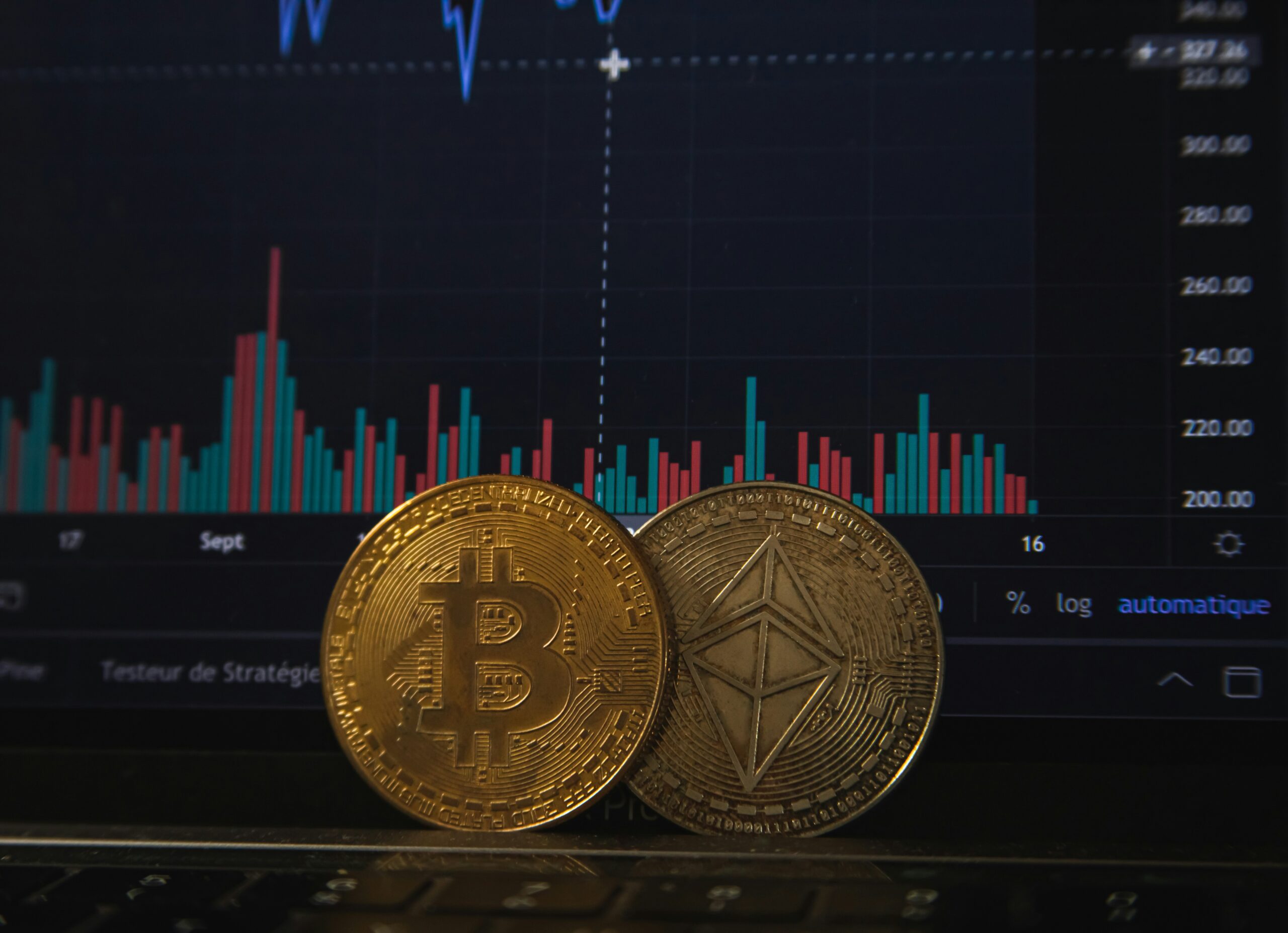
Bitcoin’s positioning as “digital gold” represents perhaps the most mainstream cryptocurrency investment case. The argument centers on Bitcoin’s absolutely scarce supply of 21 million coins, a decentralized network immune to government manipulation, and properties superior to physical gold in portability, divisibility, and verifiability. In an era of persistent inflation concerns, unprecedented government debt levels, and continued monetary expansion by central banks, Bitcoin advocates argue that a non-sovereign, programmatically scarce asset provides essential portfolio protection against currency debasement. The approval of spot Bitcoin ETFs in the United States in January 2024 legitimized this narrative, with traditional financial institutions like BlackRock and Fidelity offering Bitcoin exposure to mainstream investors.
The technological infrastructure thesis extends beyond Bitcoin to smart contract platforms like Ethereum, Solana, and others, building decentralized application ecosystems. This perspective views cryptocurrency investments as stakes in transformative technology comparable to early internet investments. Decentralized finance (DeFi) protocols enable financial services without traditional intermediaries, potentially disruptingthe trillion-dollar banking and financial services industries. Non-fungible tokens (NFTs) create verifiable digital ownership for art, music, gaming items, and increasingly real-world assets. If this technology achieves even a fraction of its theoretical potential in reshaping finance, commerce, and digital ownership, early investors in the underlying infrastructure could see substantial returns.
Portfolio diversification benefits that cryptocurrency proponents cite stem from digital assets’ historically low correlation with traditional markets. During periods when stocks and bonds move in tandem, cryptocurrency’s distinct risk factors theoretically provide true diversification rather than simply adding more correlated risk. Academic research on cryptocurrency’s correlation with traditional assets shows mixed results, with correlation increasing during extreme market stress but remaining relatively low during normal conditions. For sophisticated investors seeking portfolio optimization, even a small cryptocurrency allocation can theoretically improve risk-adjusted returns through diversification benefits.
The institutional adoption narrative has strengthened considerably since 2020. Major corporations, including MicroStrategy, Tesla, and Block, hold Bitcoin on their balance sheets as treasury reserves. Sovereign wealth funds have begun allocating small percentages to cryptocurrency. Traditional payment processors like PayPal, Visa, and Mastercard have integrated cryptocurrency capabilities. This institutional validation suggests cryptocurrency has transcended speculative mania to become an established alternative asset class, reducing concerns about complete rejection by mainstream finance.
However, honest analysis requires acknowledging that these investment cases rest on assumptions about future adoption, regulatory acceptance, and technological success that remain unproven. Bitcoin’s store of value proposition depends on continued adoption and acceptance—it has no intrinsic value like productive assets generating cash flows. The technology infrastructure thesis requires decentralized applications to achieve mainstream usage that, fifteen years into blockchain’s existence, remains largely theoretical outside speculative financial applications. These realities demand that investors approach cryptocurrency with appropriate skepticism alongside optimism.
Confronting Legitimate Risks and Concerns
Cryptocurrency skeptics raise valid concerns that prospective investors must honestly address rather than dismissing as ignorance or hostility toward innovation. Many smart, well-informed investors, including Warren Buffett, Charlie Munger, and prominent economists, view cryptocurrency as speculative excess disconnected from fundamental value creation.
Extreme volatility represents cryptocurrency’s most obvious risk, with 50-80% drawdowns from peak prices occurring regularly throughout Bitcoin’s history. An investor who purchased Bitcoin near its November 2021 peak around $69,000 watched their investment decline to approximately $16,000 by late 2022—a 77% loss that would devastate most investors psychologically and financially. While Bitcoin recovered substantially, reaching new all-time highs above $73,000 in early 2024, this volatility pattern repeats across market cycles. Altcoins experience even more severe volatility, with 90%+ declines common during bear markets. This volatility makes cryptocurrency inappropriate for short-term capital or money needed for near-term expenses.
Regulatory uncertainty continues to cloud cryptocurrency’s future despite increasing clarity in some jurisdictions. The US Securities and Exchange Commission has taken aggressive enforcement action against numerous cryptocurrency projects and exchanges, arguing that many tokens constitute unregistered securities. The regulatory treatment of DeFi protocols, stablecoins, and various cryptocurrency business models remains contested. While some view regulation as inevitable maturation that will ultimately support institutional adoption, others fear restrictive frameworks could severely limit cryptocurrency’s utility and value proposition. The UK’s evolving regulatory approach through the Financial Conduct Authority similarly creates uncertainty for British investors.
Security vulnerabilities and fraud present genuine risks that traditional financial systems have largely eliminated. Exchange hacks resulting in billions in customer losses, rug pull scams where developers abandon projects after raising funds, phishing attacks stealing private keys, and countless other attack vectors create a hostile environment for unwary investors. While security practices and custody solutions have improved substantially, cryptocurrency still requires higher vigilance and technical competence than traditional investments. The irreversible nature of blockchain transactions means mistakes or thefts often cannot be recovered.
The lack of fundamental valuation models makes cryptocurrency pricing largely sentiment-driven and difficult to analyze through traditional investment frameworks. Stocks can be valued through discounted cash flows, price-to-earnings ratios, and other metrics tied to underlying business performance. Real estate generates rental income, providing objective value floors. Cryptocurrency, particularly Bitcoin, generates no cash flows and has no productive use outside serving as money ora speculative vehicle. This makes valuation highly subjective and vulnerable to sentiment shifts from extreme greed to extreme fear.
The technological complexity and learning curve cryptocurrency demands exceed those of traditional investments substantially. Understanding blockchain technology, cryptographic security, wallet management, private key custody, gas fees, smart contract risks, and numerous other technical concepts creates barriers that many potential investors reasonably choose not to overcome. This complexity creates information asymmetries that scammers exploit and prevents many intelligent investors from effectively evaluating cryptocurrency investments.
Environmental concerns about Bitcoin mining’s energy consumption, though substantially addressed by Ethereum’s transition to proof-of-stake and increasing renewable energy usage in mining, still attract legitimate criticism. Bitcoin’s proof-of-work consensus requires substantial computational energy, and while proponents argue this energy usage secures a revolutionary monetary network and increasingly uses stranded or renewable energy, critics question whether the environmental cost justifies Bitcoin’s benefits.
Current Market Dynamics and Comparative Analysis
Evaluating cryptocurrency’s investment worthiness in 2026 requires analyzing current market dynamics compared to historical patterns and alternative investment opportunities available to investors today.
Bitcoin’s current market capitalization exceeds $1.3 trillion, representing substantial growth from early years but also indicating maturation that necessarily limits percentage return potential. A $1,000 Bitcoin investment in 2011 could have returned millions, as Bitcoin grew from dollars to thousands of dollars. Today’s investor purchasing at $65,000 cannot reasonably expect 100,000% returns—Bitcoin reaching $65 million per coin would create an absurd market capitalization exceeding global wealth. Realistic projections from cryptocurrency advocates suggest Bitcoin could reach $100,000-$500,000 over the next decade, representing 50-650% returns—substantial but far from the asymmetric opportunities early adopters captured.
The macroeconomic environment in 2026 differs significantly from the low-interest-rate, expansionary monetary policy era that supported cryptocurrency’s explosive growth from 2020-2021. Central banks maintaining elevated interest rates to combat inflation create higher opportunity costs for non-yielding assets like Bitcoin. Traditional safe assets like Treasury bills offering 4-5% yields compete for capital that might otherwise flow into cryptocurrency speculation. This environment arguably creates attractive accumulation opportunities for long-term investors but challenging conditions for near-term price appreciation.
The cryptocurrency market structure has fragmented substantially beyond Bitcoin dominance. Bitcoin represents approximately 55% of the total cryptocurrency market capitalization, with thousands of alternative cryptocurrencies competing for investment capital. This fragmentation creates both opportunities and risks—investors can access specific use cases through specialized tokens but also face increased difficulty identifying legitimate projects amid countless scams and failed experiments. The collapse of once-prominent projects like Terra/Luna, which lost over $40 billion in value virtually overnight, demonstrates the existential risks altcoin investors face.
Institutional infrastructure supporting cryptocurrency investment has improved dramatically, reducing barriers and risks for mainstream investors. Spot Bitcoin and Ethereum ETFs trade on major exchanges, providing regulated exposure without requiring cryptocurrency wallets or exchange accounts. Regulated custody solutions from firms like Coinbase Institutional and Fidelity Digital Assets secure billions in cryptocurrency holdings. Payment processors enabling cryptocurrency transactions at millions of merchants increase utility. This infrastructure makes cryptocurrency more accessible and secure than during its early years.
Comparing cryptocurrency to alternative investments available in 2026 provides essential context. Stock market valuations in the US remain elevated by historical standards, suggesting modest expected returns from traditional equities over the coming decade. Real estate prices in major US and UK markets have appreciated substantially, creating affordability challenges and potentially limiting future gains. Treasury yields provide guaranteed returns but may not outpace inflation meaningfully. In this environment, cryptocurrency’s risk-reward profile may appeal to investors seeking higher potential returns and willing to accept corresponding volatility.
The narrative around cryptocurrency adoption continues evolving with real-world use cases emerging beyond speculation. El Salvador’s adoption of Bitcoin as legal tender, while controversial and facing implementation challenges, represents a sovereign nation integrating cryptocurrency into its monetary system. Corporate treasury adoption by MicroStrategy and others demonstrates Bitcoin’s viability as an inflation hedge for businesses. Payment integration by traditional financial services suggests cryptocurrency is achieving utility beyond purely speculative trading.
Strategic Approaches for New Cryptocurrency Investors
For investors concluding that cryptocurrency merits allocation in their portfolios, implementing strategic approaches aligned with risk tolerance and investment timeframes maximizes the probability of positive outcomes while minimizing the chances of devastating losses.
Portfolio allocation should reflect cryptocurrency’s high-risk, high-potential return profile. Traditional financial advisors often suggest limiting cryptocurrency to 1-5% of total portfolio value for investors with moderate risk tolerance, extending to 10-20% for those with higher risk appetites and longer time horizons. This allocation approach ensures that even a complete cryptocurrency loss, while painful, wouldn’t destroy overall financial security. The specific percentage depends on individual circumstances, including age, income stability, total net worth, and psychological tolerance for volatility.
Dollar-cost averaging rather than lump-sum investment reduces timing risk in volatile markets. Investing fixed amounts on regular schedules—weekly, biweekly, or monthly—ensures purchasing at various price points throughout market cycles rather than risking concentrated entry at market peaks. Historical analysis shows DCA outperforms lump-sum investment in volatile assets like cryptocurrency when comparing risk-adjusted returns, though lump-sum can outperform in consistently rising markets. For new investors lacking confidence in timing entry, DCA provides psychological comfort alongside statistical benefits.
Asset selection between Bitcoin, Ethereum, and altcoins should reflect risk tolerance and conviction levels. Bitcoin represents the most established cryptocurrency with the longest track record, clearest regulatory treatment, and strongest institutional adoption—making it appropriate for conservative cryptocurrency allocation. Ethereum offers exposure to smart contract infrastructure and the DeFi ecosystem with more risk but potentially higher returns. Altcoins provide access to specific use cases and technologies with substantially higher risk of total loss. A common conservative approach allocates 60-70% to Bitcoin, 20-30% to Ethereum, and 0-10% to selected altcoins after thorough research.
Security practices cannot be overstated in importance. Hardware wallets like Ledger or Trezor provide secure self-custody for substantial holdings, eliminating exchange counterparty risk. For smaller amounts, reputable exchanges with strong security track records and insurance coverage offer convenient custody with reasonable security. Understanding and implementing two-factor authentication, secure password practices, and phishing attack awareness prevent the most common theft vectors. Never sharing private keys or seed phrases and verifying all transaction details before confirming prevents irreversible mistakes.
Educational investment before financial investment separates successful cryptocurrency participants from those who lose money through ignorance. Understanding basic blockchain concepts, cryptographic security, different cryptocurrency types and use cases, market cycle patterns, and common scams provides the foundation for informed decision-making. Resources, including cryptocurrency exchange educational sections, reputable news sources like CoinDesk and CoinTelegraph, and community forums, offer learning opportunities. However, maintaining healthy skepticism toward promotional content disguised as education remains essential.
Tax compliance deserves attention as cryptocurrency tax treatment continues evolving. In the United States, cryptocurrency is treated as property subject to capital gains taxation, requiring detailed record-keeping of all transactions. The UK similarly applies capital gains tax to cryptocurrency profits. Understanding tax obligations, maintaining transaction records, and potentially consulting tax professionals familiar with cryptocurrency can prevent legal complications and optimize tax efficiency through strategies like tax-loss harvesting during bear markets.
Future Outlook and Long-Term Considerations
Cryptocurrency’s future trajectory remains genuinely uncertain despite growing adoption and institutional acceptance. Honest analysis acknowledges multiple possible outcomes ranging from transformative success to regulatory suppression or technological obsolescence.
The optimistic scenario envisions cryptocurrency achieving widespread adoption as both a store of value and a technological infrastructure for Web3 applications. Bitcoin becomes a globally recognized reserve asset held by central banks, corporations, and millions of individuals as protection against monetary inflation. Ethereum and other smart contract platforms host massive ecosystems of decentralized applications providing genuine utility in finance, gaming, social media, and identity. Regulatory frameworks emerge that provide clarity while preserving cryptocurrency’s core innovations. In this scenario, early investors in leading cryptocurrencies potentially see life-changing returns despite the asset class’s current maturation.
The moderate scenario sees cryptocurrency persisting as a niche asset class similar to gold or commodities—accepted by some investors and institutions but never achieving revolutionary transformation of finance or technology. Bitcoin maintains value as digital gold for a subset of investors seeking non-sovereign monetary alternatives. Some blockchain applications achieve moderate success in specific use cases while failing to disrupt traditional systems broadly. Cryptocurrency remains volatile but continues to exist indefinitely as an alternative investment option. Returns in this scenario would likely track or modestly outperform traditional markets without the explosive growth of early years.
The pessimistic scenario involves regulatory crackdowns, technological failures, or shifting investor sentiment, causing cryptocurrency to lose substantial value permanently. Governments coordinate to restrict or ban cryptocurrency usage, viewing it asa threat to monetary sovereignty and a tool for illicit activity. Security vulnerabilities or scaling limitations prevent blockchain technology from achieving promised benefits. Investor enthusiasm wanes as promised revolutions fail to materialize, causing a sustained bear market from which cryptocurrency never recovers. While this scenario seems less probable given current institutional adoption, it remains possible and would devastate investors.
The most likely outcome probably lies somewhere between these extremes—cryptocurrency persisting and growing, but not achieving the most ambitious visions proponents articulate. Understanding this range of possibilities helps investors calibrate expectations and position sizing appropriately. Cryptocurrency should be approached as a high-risk, high-potential investment that might deliver exceptional returns but could also lose substantial value.
Technological developments will significantly influence cryptocurrency’s trajectory. Ethereum’s continued scaling through layer-two solutions, Bitcoin’s evolution through Lightning Network adoption, and innovations in privacy, interoperability, and usability will determine whether blockchain technology transcends speculation to achieve genuine utility. Competition from central bank digital currencies (CBDCs) may either legitimize cryptocurrency concepts or provide government-controlled alternatives that reduce demand for decentralized options.
Conclusion: Making Your Personal Investment Decision
The question of whether cryptocurrency remains worth investing in cannot be answered universally—it depends entirely on individual financial circumstances, risk tolerance, investment timeframe, and personal conviction about cryptocurrency’s future. For some investors, cryptocurrency represents an essential portfolio component providing diversification, inflation protection, and exposure to transformative technology. For others, the volatility, complexity, and uncertainty make cryptocurrency inappropriate regardless of potential returns.
What can be stated definitively is that cryptocurrency in 2026 is neither the can’t-miss opportunity of Bitcoin’s early years nor the obvious scam that skeptics sometimes portray. It exists as an established but volatile alternative asset class with genuine adoption by institutions, clear use cases beyond pure speculation, and improving infrastructure supporting mainstream participation. However, it also carries substantial risks, including regulatory uncertainty, extreme volatility, security vulnerabilities, and questions about the long-term value proposition that thoughtful investors cannot ignore.
New investors should approach cryptocurrency with eyes open to both opportunities and risks. Start with education before allocation, invest only capital you can afford to lose completely, implement proper security practices from the beginning, and maintain disciplined position sizing that prevents cryptocurrency volatility from threatening overall financial security. Use dollar-cost averaging to reduce timing risk, focus on established cryptocurrencies like Bitcoin and Ethereum rather than speculative altcoins, and plan for multi-year holding periods rather than attempting to trade volatility.
Cryptocurrency’s ultimate success or failure will unfold over years and decades, not weeks or months. For investors willing to embrace volatility, commit to ongoing education, and maintain appropriate position sizing, cryptocurrency can serve as a reasonable portfolio component providing exposure to potentially transformative technology. For those uncomfortable with uncertainty or needing capital preservation, avoiding cryptocurrency entirely represents an equally valid decision. The key is making informed choices aligned with your specific situation rather than following hype or fear from either cryptocurrency advocates or critics.
The honest answer to whether cryptocurrency is still worth investing in is: it depends on you. Evaluate the evidence presented here, consider your financial circumstances and psychological tolerance for volatility, and make the decision that aligns with your investment objectives. Neither completely avoiding nor overexposing yourself to cryptocurrency serves your interests—thoughtful, informed allocation appropriate to your situation represents the optimal path forward in navigating this polarizing but potentially rewarding asset class.
This article is for informational and educational purposes only and does not constitute financial advice. Cryptocurrency investments carry substantial risk, including potential total loss of capital. Always conduct thorough research and consider consulting qualified financial advisors before making investment decisions.


Leave a Reply